
Brand Architecture for Multi-Region Companies
A case study format: what stays fixed everywhere, what adapts by region, and why the regional descriptor matters more than most companies think — using BricketX's own four-region structure.

Brand architecture for a multi-region company defines how one master brand and several regional identities relate to each other — which elements stay identical everywhere and which get a local layer. Get the balance wrong and a company either looks fragmented across markets or loses the local credibility a regional presence is supposed to build. BricketX's own structure — one brand, four regional hub identities, each named for what that region actually does — is a working example of how that balance gets built in practice.
What brand architecture actually means
Brand architecture is the system behind how a company's regions, products, or divisions relate back to the parent brand. Two models sit at opposite ends: a house of brands, where each region or product runs as its own distinct identity with little visible connection to a parent — the way a conglomerate might own unrelated consumer brands — and a branded house, where one master brand and visual system carries everywhere, with regions distinguished by a descriptor rather than a separate identity.
BricketX runs the second model: BricketX Pakistan, not a differently named entity that happens to be owned by BricketX.
Case study: how BricketX structures its brand across four regions
The network spans four regions, and each one carries the same master brand with a descriptor tied to its actual function rather than a generic "we're here too" localization:
- BricketX Pakistan — the operational and engineering hub, Karachi-based.
- BricketX Dubai — regional leadership and investor relations.
- BricketX Kenya — production and on-the-ground sourcing.
- BricketX UK / BVI — corporate holdings and governance.
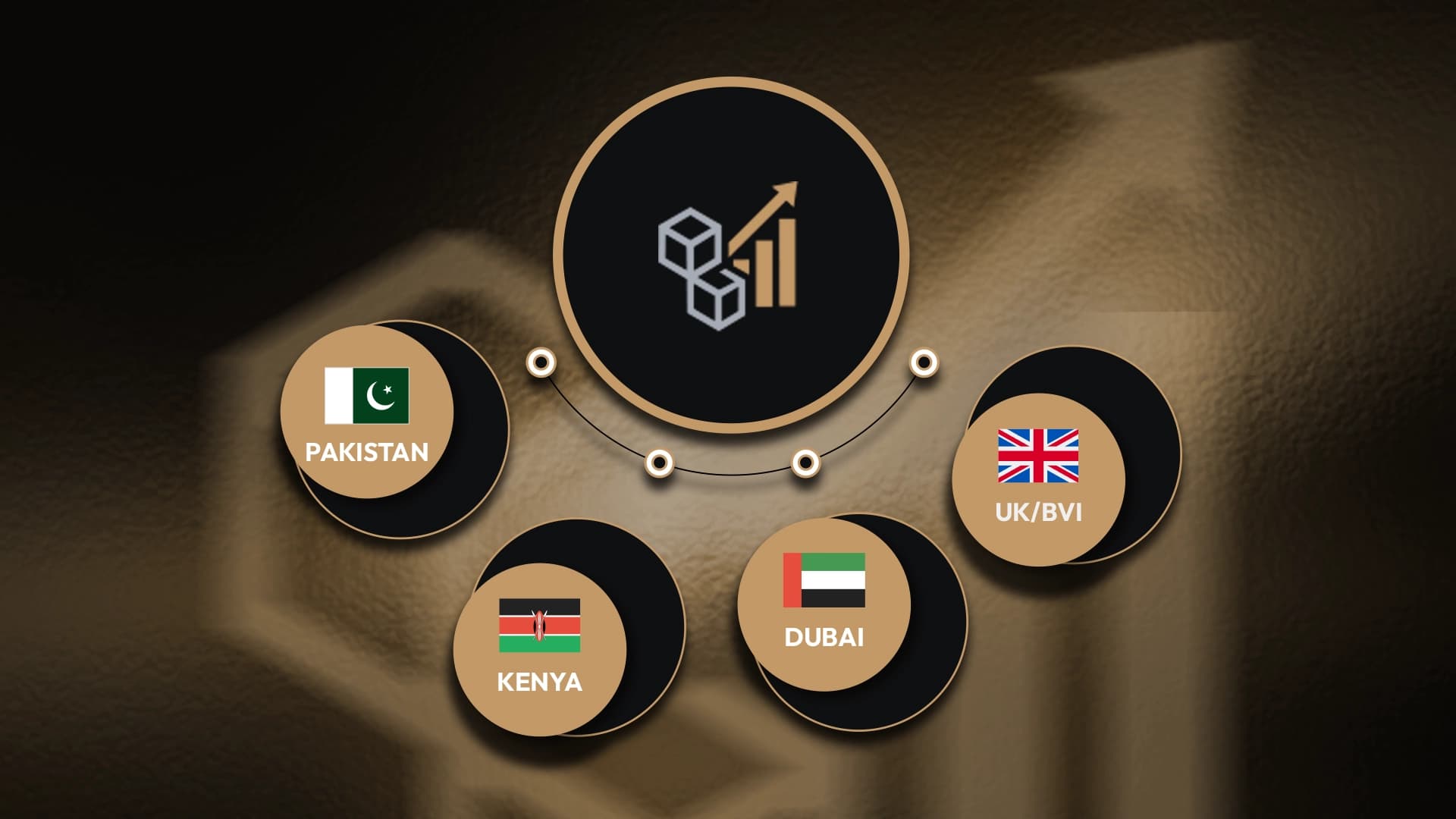
The descriptor is doing real work here. "Operational & Innovation Hub" tells a visitor what Pakistan's site is actually for before they read a single section — it isn't a placeholder like "BricketX Pakistan — Coming Soon" or a copy-pasted mission statement repeated across four country pages. Each region's brand layer is legible on its own, without needing to explain itself.
The visual and verbal system carries across the network too: the same technical vocabulary, the same node-numbering convention for departments and regions, the same dark, engineering-inspired interface. A visitor moving from one regional site to another shouldn't have to re-learn how to read the brand.
The three layers of a working multi-region brand architecture
What Fig. 01 shows in the abstract plays out as three practical decisions every multi-region company has to make:
Fixed core
Name, logo, primary color and type system, and voice. This layer doesn't flex by region — it's what makes the brand recognizable at all, anywhere in the network.
Regional layer
A descriptor tied to what that region actually does, not a generic geographic label. "Operational & Innovation Hub" communicates function; "Pakistan Office" doesn't.
Local-market layer
Language, regulatory disclosures, imagery, and which part of the business a region leads with in its own market. This is where the brand is allowed to look and sound genuinely local.
What consistency protects
Recognition. An investor or partner should know it's the same company the moment they land on any regional site.
What localization protects
Credibility. A region that reads as generic or copy-pasted signals it isn't really invested in that market.
Why a generic regional descriptor fails
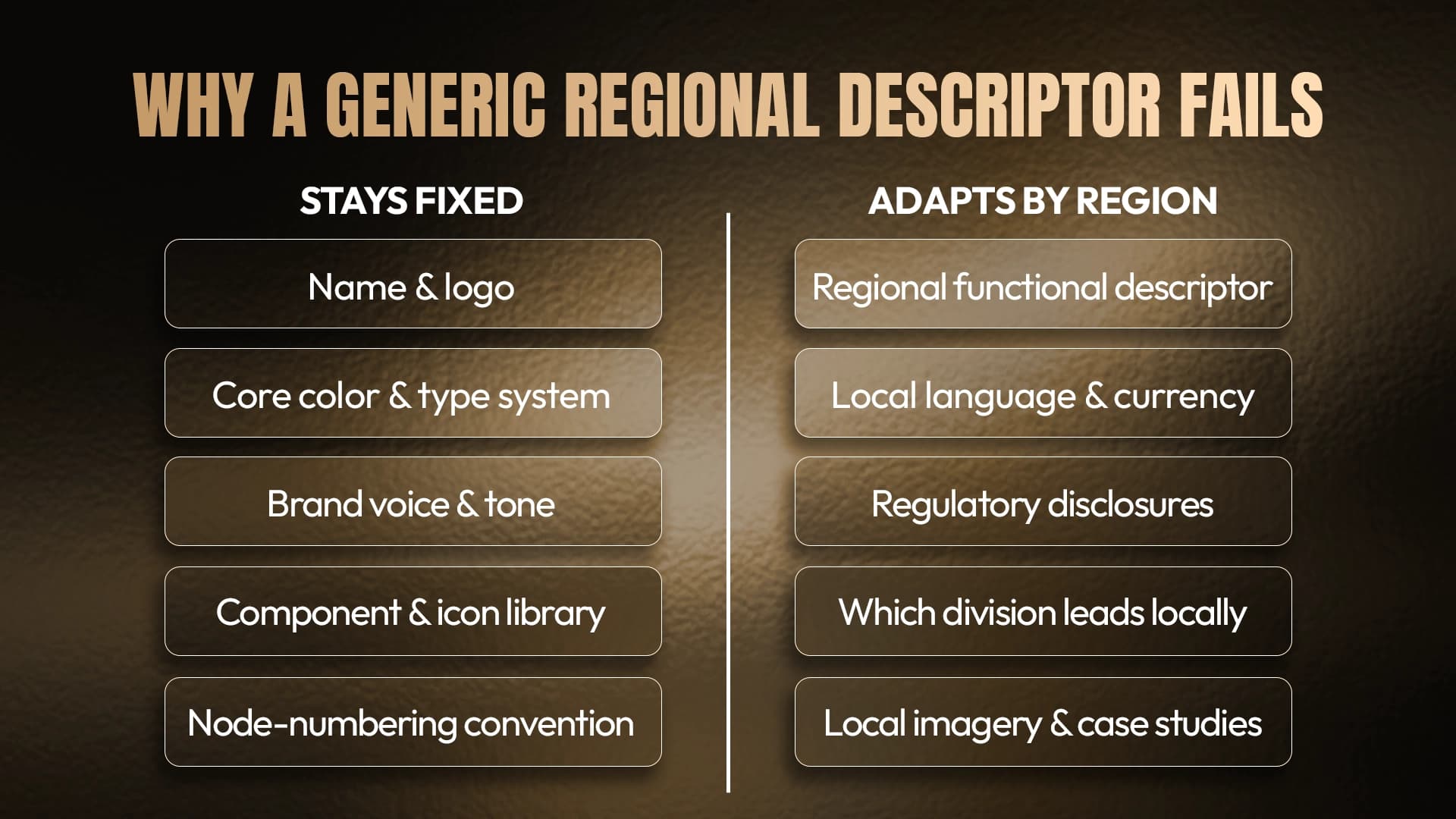
A regional site that only changes its country name and reuses the master brand's copy word-for-word reads as an afterthought — the local team never actually got a say in how the brand shows up in their market. The opposite failure is just as common: a regional office redesigns its own logo variant, picks its own colors, or writes in a voice that doesn't match the rest of the network, and the brand starts to fragment. BricketX's descriptor approach avoids both — the region gets a distinct, meaningful identity layer without touching anything in the fixed core.
How to keep consistency without flattening local identity
The mechanism that makes this work in practice is a documented design system rather than a style guide people are expected to remember. A shared token library — color, type, spacing, and components defined once and pulled from centrally — means a regional team builds their own pages without redrawing the brand from memory.
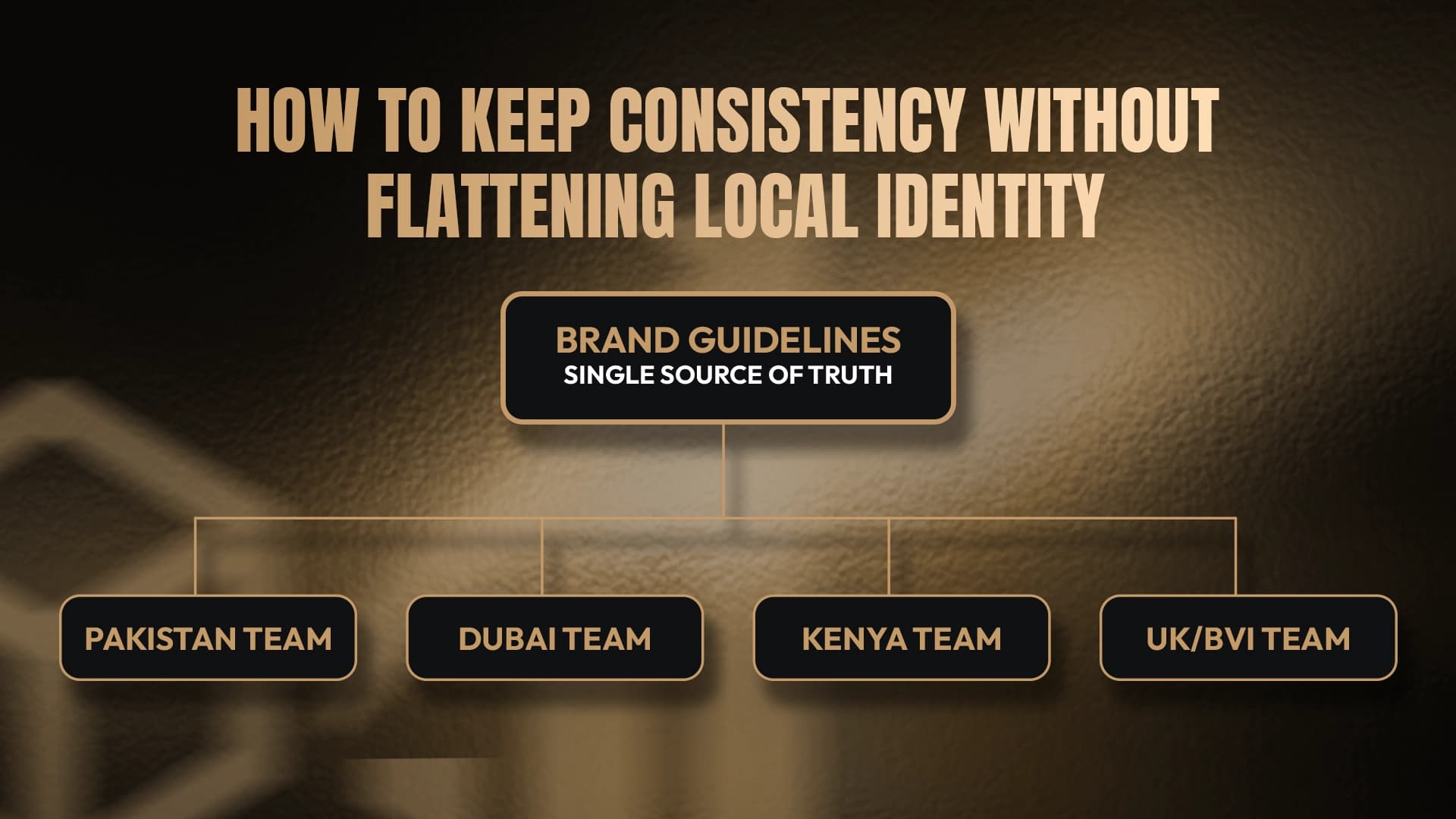
BricketX's own creative division documents this as a versioned system rather than a static PDF — a token library in the hundreds, covering color, type, spacing, and components, updated and synced across the network rather than left for each region to interpret. That's the difference between a brand that stays coherent at four regional sites and one that slowly diverges into four different-looking companies.
Common brand architecture mistakes in multi-region companies
- No single source of truth. Guidelines exist as a document someone made once and nobody updates, so each new region works from whatever version they happened to find.
- Logo or color drift. Small deviations per region — a slightly different shade, a stretched logo — that compound until regions no longer look related.
- Generic descriptors. A regional tagline that could apply to any company in any industry, telling a visitor nothing about what that office actually does.
- Voice inconsistency. One region's copy sounds like a different company entirely, undermining the trust a consistent brand is supposed to build.
Frequently asked questions
What is brand architecture?
What's the difference between a branded house and a house of brands?
How should a multi-region company decide what stays fixed versus local in its branding?
What is BricketX's brand architecture model?
What tools keep brand consistency across multiple regional offices?
The bottom line
Brand architecture for a multi-region company isn't a choice between consistency and localization — it's deciding exactly where the line between them sits, and building a system that holds it there automatically. Fix the core, give each region a descriptor that says what it actually does, and let everything below that layer flex to the local market. That's what keeps a four-region network reading as one company instead of four.
Build secure, scalable infrastructure.
The strategies and systems detailed in this briefing are built by our operations and technology desks. Reach out to explore how we deploy these solutions.
Contact Our DeskMore Blogs
How AI Automates Investor Research and Reporting in Fintech
From raw filings to a live investor dashboard - where artificial intelligence actually removes manual work from the pipeline, and where human oversight still has to stay.
Advertising Compliance for Shariah-Based Investment Platforms
A Shariah-compliant product can still fail an ad review. Here are the three checks - platform policy, financial regulation, and Shariah governance - every ad has to clear before it goes live.