
Idea-to-Scale: Inside BricketX's 5-Step Operating Model
Research, Design, Build, Launch, Run - the same fixed path every project moves through, each step owned by a different department.
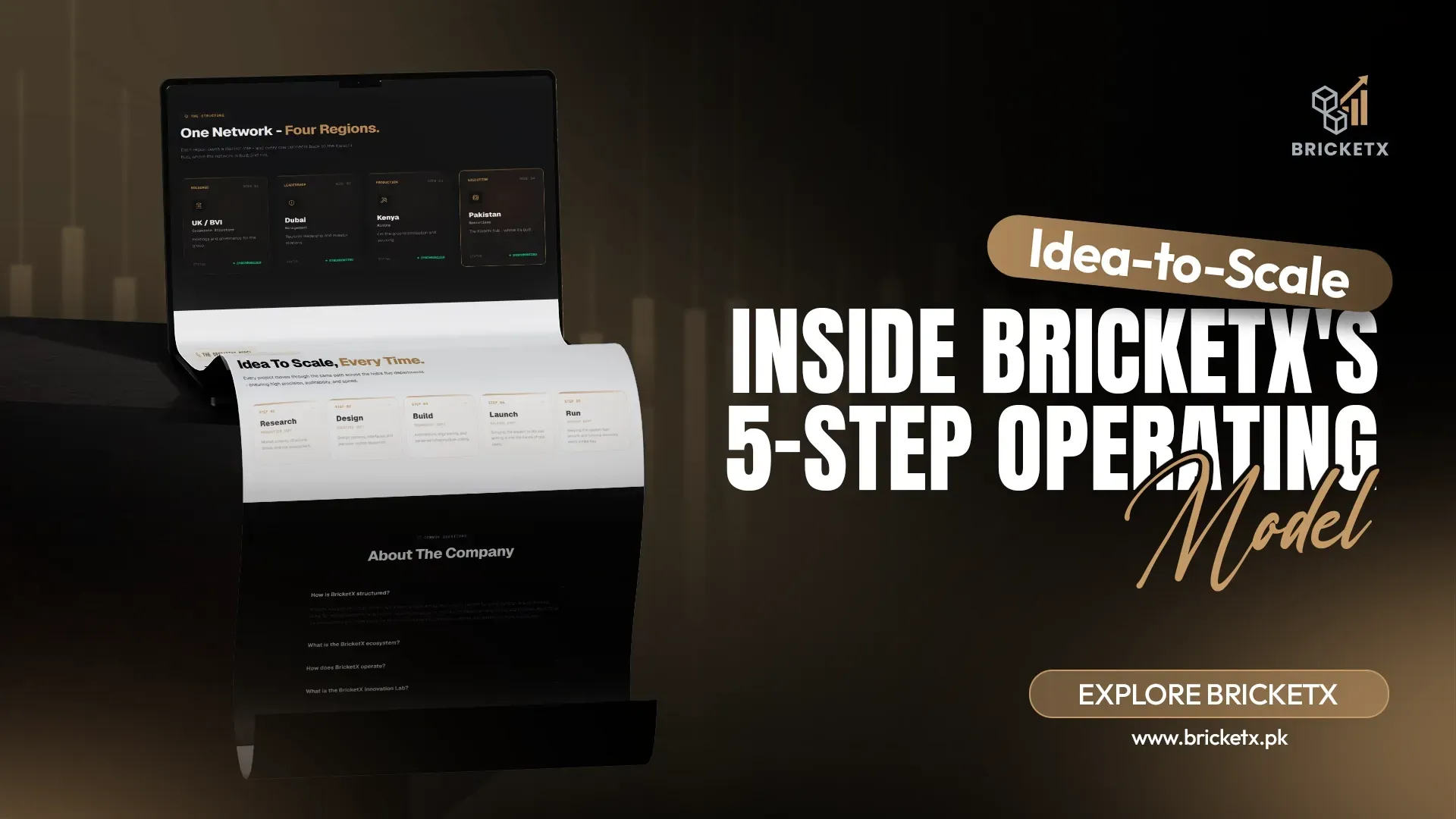
BricketX's operating model moves every project through the same five steps regardless of which department leads it: Research, Design, Build, Launch, and Run. Each step is owned by a specific department, so a project has one deterministic path from idea to a live system in front of real users - not an ad hoc process that looks different depending on who's running it.
What "idea-to-scale" actually means
Most companies describe their process in general terms - "we move fast," "we're agile" - without a fixed sequence anyone could point to. BricketX's model is the opposite: a named, five-step path that every initiative runs through in the same order, whether it's a new investor-facing product, an internal tool, or an infrastructure upgrade. The benefit isn't rigidity for its own sake - it's that precision, auditability, and speed all improve when the path is known in advance instead of negotiated fresh every time.
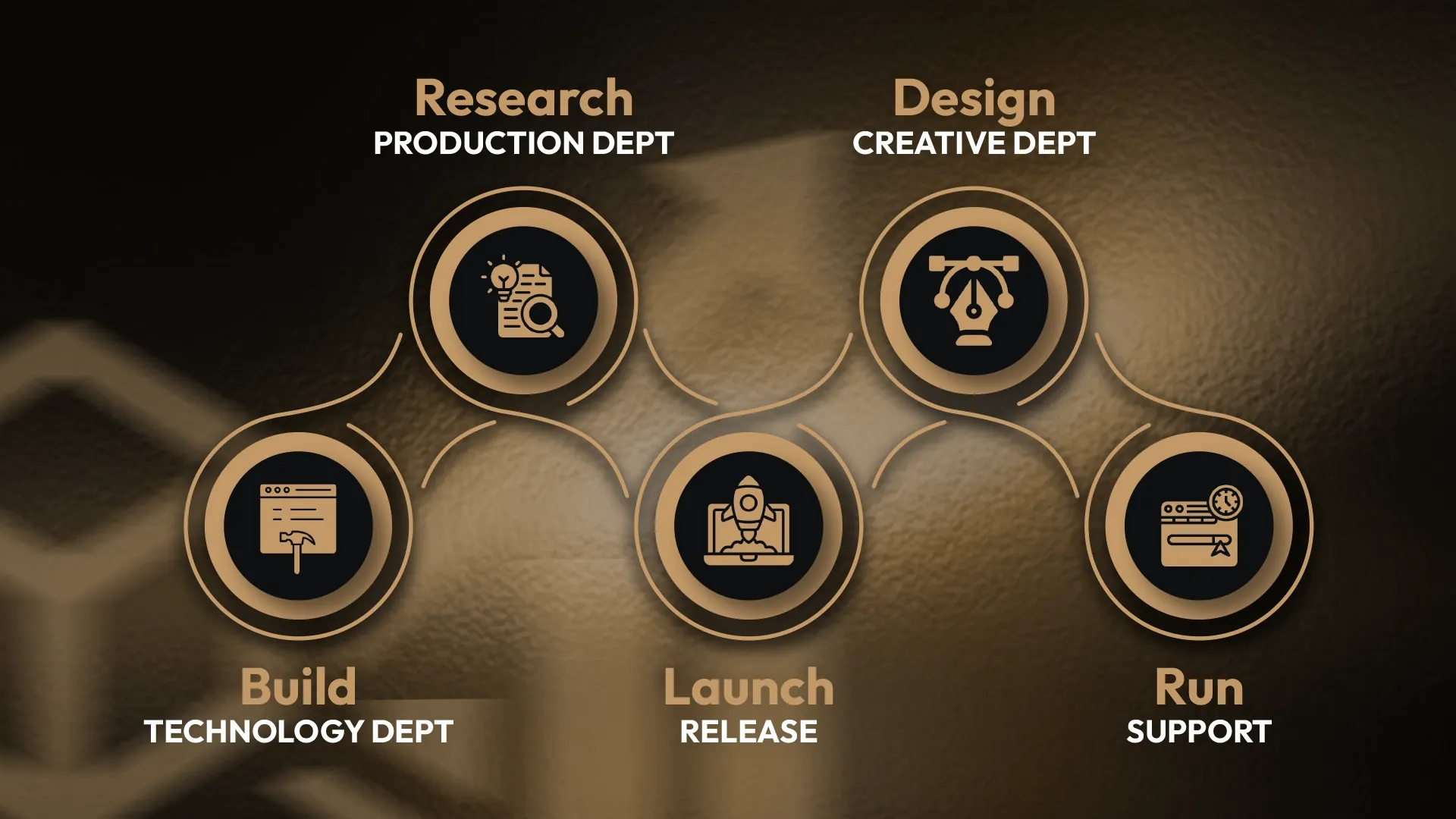
The five steps, in order
01. Research - Production Department
Every project starts with market scoping, a structural thesis, and risk assessment - establishing whether an idea is worth building before any design or engineering time is spent on it.
02. Design - Creative Department
Once a project clears research, it moves to design systems, interfaces, and motion blueprints - the visual and interaction layer gets defined before a single line of production code is written.
03. Build - Technology Department
Architecture, engineering, and infrastructure coding turn the design into a working system - this is where the project actually gets built, hardened, and tested.
04. Launch - Release Function
Launch is the step where the project reaches real users for the first time - the handoff from internal build to live product, coordinated so nothing ships before it's ready.
05. Run - Support Function
Once live, a project doesn't stop needing attention - Run keeps the system fast, secure, and stable every day, on an ongoing basis rather than a one-time handoff.
Build (Step 03)
A finite job with an end point - the system exists and works by the time this step is done.
Run (Step 05)
An ongoing job with no end point - the system has to keep working, every day, for as long as it's live.
Why a fixed sequence matters more than flexibility
The instinct at most companies is to treat process as something each project leader adapts on the fly. BricketX's model argues the opposite is usually better for a network operating across multiple regions and regulatory environments: a fixed sequence means every stakeholder - internal teams, investors, regulators - already knows what stage a project is at and what comes next, without needing a project-specific explanation. It also means a delay or issue is easier to diagnose, because there's a known step where it happened rather than an undocumented, improvised process to reconstruct after the fact.
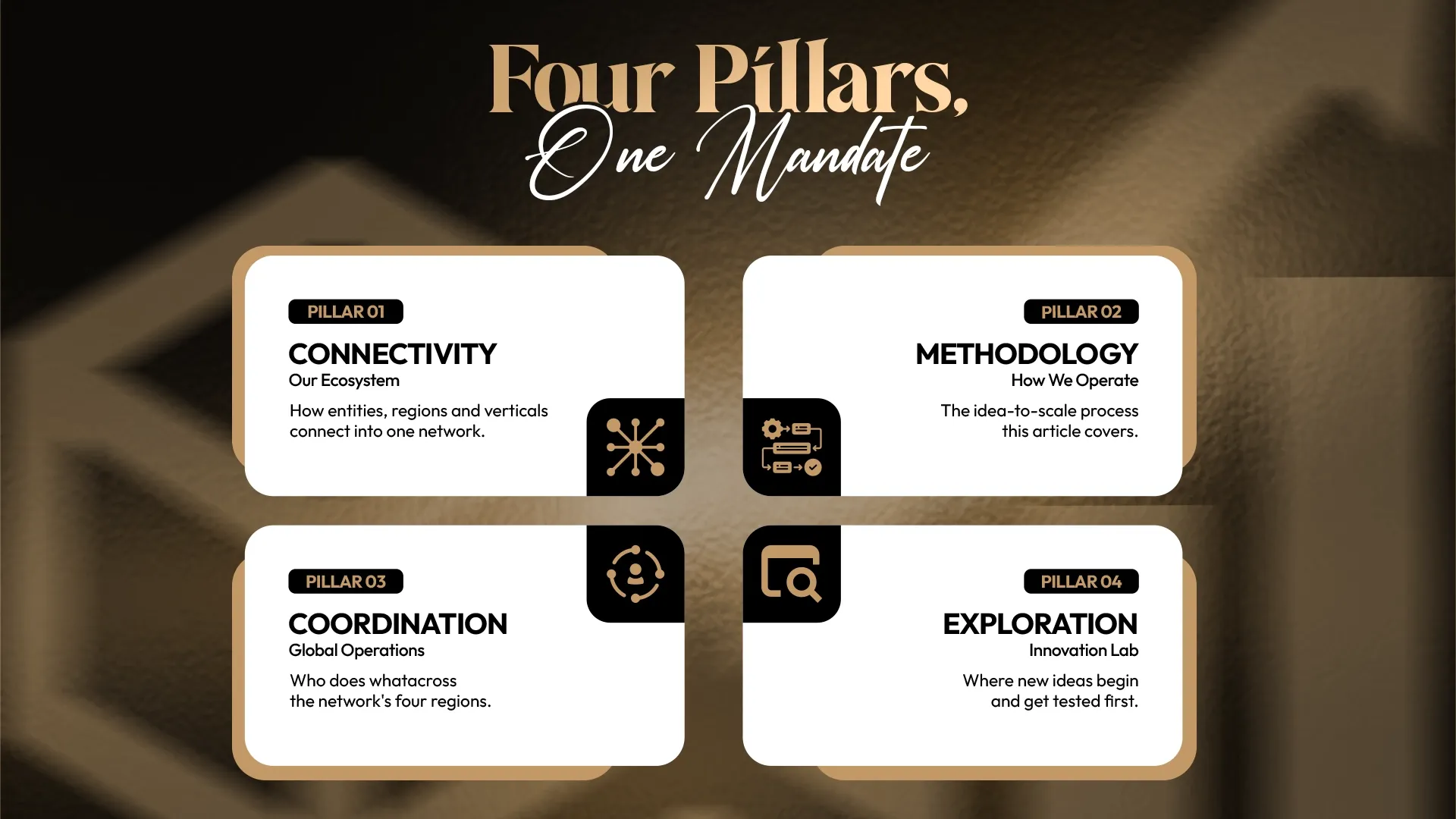
The four pillars this process sits inside
The operating model is one of four structural pillars that define how BricketX runs as a network - connectivity, methodology, coordination, and exploration each cover a different part of how the hub organizes itself:
What this looks like for an investor or partner
For someone evaluating the network from the outside, a documented five-step process is a trust signal independent of any single project's outcome. It means a delay or a change in scope can be located to a specific step rather than attributed to a vague "things came up," and it means every project - regardless of size - is going through the same governance-friendly sequence rather than a case-by-case exception process. That consistency is what "zero variance" looks like in practice: not that nothing ever changes, but that the path a change follows is always the same one.
Where new ideas actually start: the Innovation Lab
Not every idea walks straight into Step 01. The Innovation Lab is where new products, AI experiments, and process improvements are tested before they're allowed to enter the network's main process at all - a filter that keeps untested ideas from consuming Research, Design, and Build resources before they've proven the underlying thesis holds up.

Frequently asked questions
What is BricketX's idea-to-scale operating model?
What are the five steps in BricketX's operating model?
Which department owns each step of the process?
Why does BricketX use a fixed process instead of a flexible one per project?
What is the BricketX Innovation Lab and how does it relate to the operating model?
The bottom line
BricketX's operating model isn't a values statement - it's a documented, five-step sequence with a named owner at every stage: Research to Production, Design to Creative, Build to Technology, Launch to Release, Run to Support. That's what "idea-to-scale, every time" actually means in practice - not that every project turns out the same, but that every project gets there the same way.
Build secure, scalable infrastructure.
The strategies and systems detailed in this briefing are built by our operations and technology desks. Reach out to explore how we deploy these solutions.
Contact Our DeskMore Blogs
How AI Automates Investor Research and Reporting in Fintech
From raw filings to a live investor dashboard - where artificial intelligence actually removes manual work from the pipeline, and where human oversight still has to stay.
Advertising Compliance for Shariah-Based Investment Platforms
A Shariah-compliant product can still fail an ad review. Here are the three checks - platform policy, financial regulation, and Shariah governance - every ad has to clear before it goes live.