
What Is Investor Relations in a Cross-Border Fintech Network?
Onboarding, communication, reporting, and support - kept consistent for the same investor no matter which region, regulator, or currency is involved.

Investor relations in a cross-border fintech network is the function that manages every touchpoint between a platform and its investors - onboarding, communication, reporting, and support - across multiple regulatory jurisdictions, currencies, and time zones. It's the same core job a single-market investment firm does, made harder by the fact that no two regions in the network share the same disclosure rules, reporting conventions, or working hours.
What investor relations actually covers
Investor relations is broader than the name suggests. It's not just communication - it's every system and process that keeps an investor's relationship with the platform accurate and current:
- Onboarding and KYC: Verifying an investor's identity and eligibility, coordinated against the rules of whichever jurisdiction they're investing from.
- Ongoing communication: Updates, formal notices, and responses to investor questions - in the channel, language, and frequency each market expects.
- Reporting: Turning portfolio and performance data into the statements an investor actually receives, on schedule.
- Support and dispute resolution: Handling the questions and disagreements that come up after money has already moved.
Why cross-border makes it harder
Every one of those four functions gets more complex the moment a platform operates across more than one region. A single-market IR team deals with one regulator's disclosure rules, one reporting currency, and one working day. A cross-border network has to reconcile all of that at once - and keep a single, coherent record of each investor throughout.
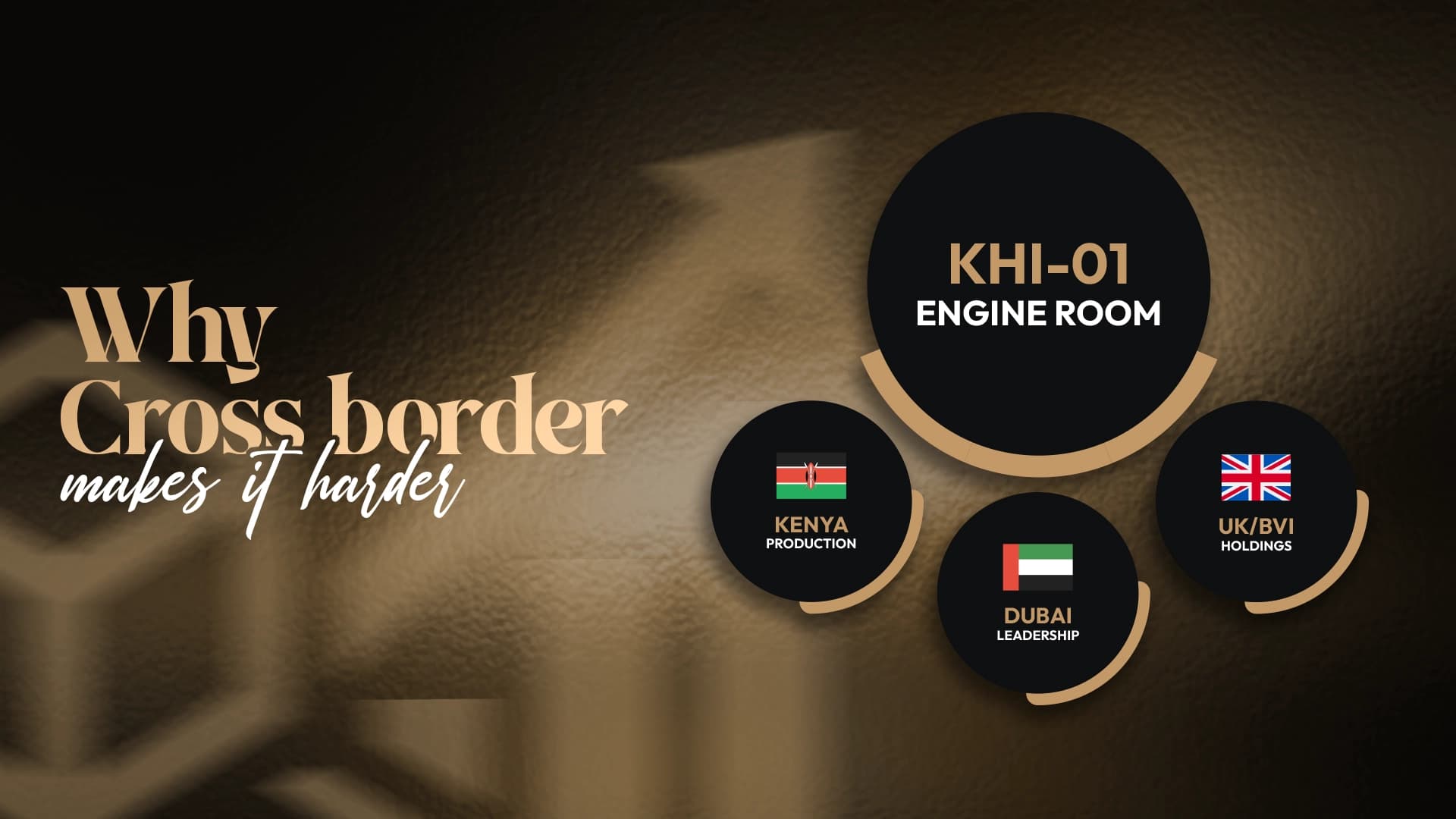
In a network structured this way, investor-facing leadership sits with the region best positioned for it - typically wherever has the strongest alignment with major investor markets and time zones - while the CRM, reporting, and dashboard systems behind that relationship are engineered out of a separate technology hub. The two don't have to be the same region, but they do have to stay in constant sync.
Regional leadership
Owns the relationship - communication, trust-building, and market-specific investor expectations.
Systems layer
Owns the infrastructure - CRM, reporting, and dashboards that keep the investor record consistent everywhere.
The systems investor relations depends on
None of this works from spreadsheets and inboxes once a platform has investors in more than one region. Four systems typically carry the weight:
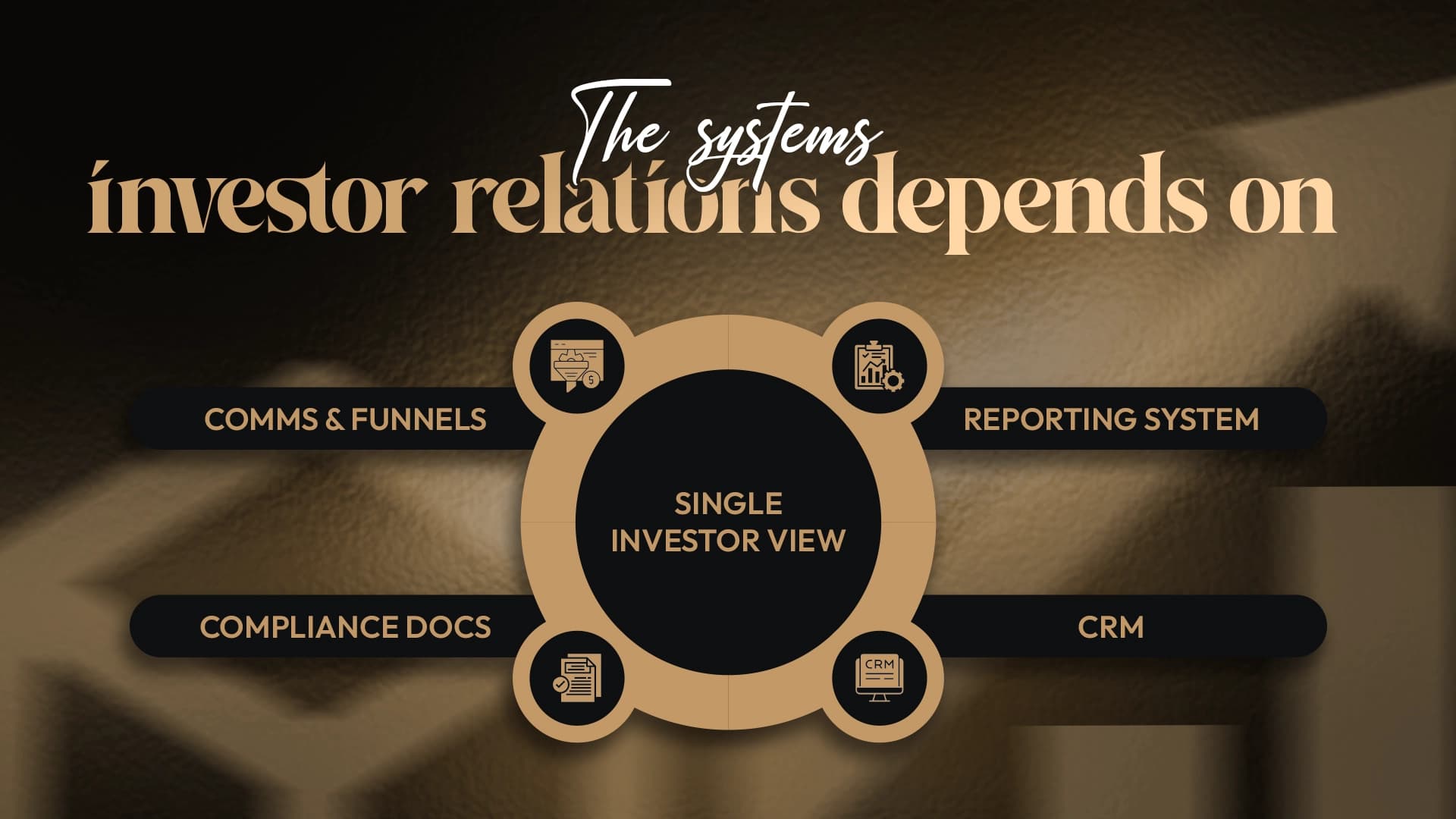
CRM
The system of record for who each investor is, what they hold, and every interaction they've had with the platform - regardless of which regional office logged it.
Reporting system
Turns the same underlying portfolio data into region-appropriate statements - different currency, format, or disclosure language, same source of truth.
Communication and funnels
The channels and cadence investors actually hear from the platform through, tuned to what each market expects rather than a single global template.
Compliance documentation
The audit trail behind every disclosure and disclaimer sent to an investor, in case a regulator in any region asks to see it.
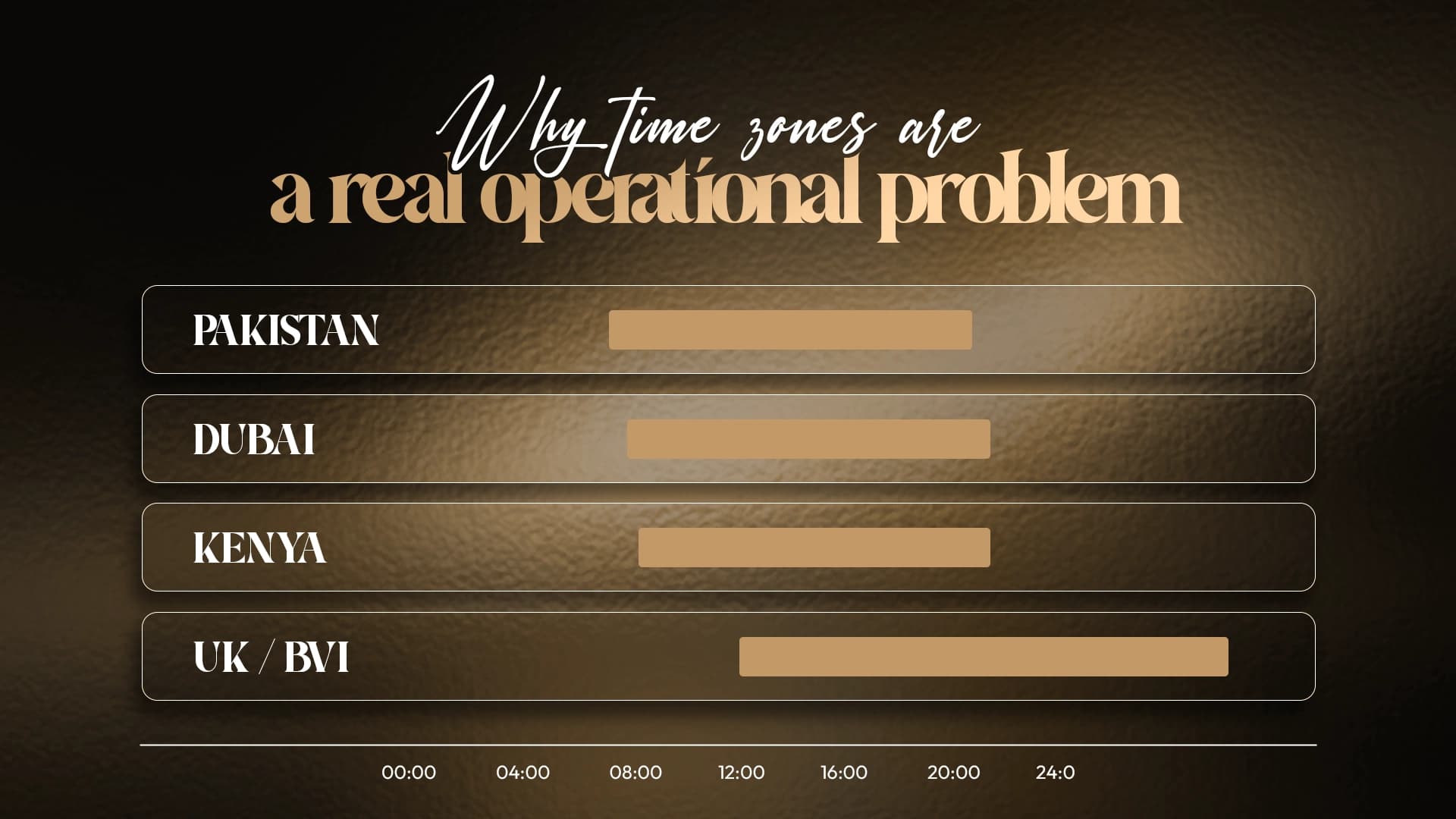
Why time zones are a real operational problem
A platform with investors in several regions doesn't get to run investor relations on one region's business hours. A question from an investor in one market can't sit unanswered until another market's office opens the next morning. Networks that run continuously usually get there by spreading investor-facing responsibility across regions whose working hours naturally overlap and extend coverage, rather than trying to staff one office around the clock.
What good cross-border investor relations looks like day to day
- An onboarding checklist that adapts per region instead of one generic KYC form that doesn't match every market's requirements.
- Reporting generated once, formatted many ways - same underlying figures, correct currency and disclosure language for each investor's jurisdiction.
- One CRM record per investor, visible the same way regardless of which regional team is looking at it.
- A clear escalation path for disputes that still respects whichever region's regulatory requirements actually apply to that investor.
Why this matters for institutional trust
For a platform positioning itself toward institutional and Shariah-conscious investors specifically, the operational discipline behind investor relations is itself part of the pitch. An investor who gets a report on time, in the right currency, with a consistent record of every prior interaction, is experiencing the same governance discipline the platform claims to apply to its underlying assets. Fragmented, region-by-region investor relations undercuts that claim before a single number is even in question.
Frequently asked questions
What is investor relations in fintech?
How is cross-border investor relations different from single-market investor relations?
What role does a CRM play in cross-border investor relations?
Who typically owns investor relations in a multi-region financial network?
How do multi-region platforms handle investor reporting across different currencies and regulations?
The bottom line
Investor relations in a cross-border fintech network is the same core job as in any single-market firm - onboarding, communication, reporting, support - made harder by regulation, currency, and time zone differences that don't resolve themselves. The networks that handle it well don't staff their way through the complexity; they build the CRM, reporting, and communication systems that keep one investor record consistent no matter which region is looking at it.
Build secure, scalable infrastructure.
The strategies and systems detailed in this briefing are built by our operations and technology desks. Reach out to explore how we deploy these solutions.
Contact Our DeskMore Blogs
How AI Automates Investor Research and Reporting in Fintech
From raw filings to a live investor dashboard - where artificial intelligence actually removes manual work from the pipeline, and where human oversight still has to stay.
Advertising Compliance for Shariah-Based Investment Platforms
A Shariah-compliant product can still fail an ad review. Here are the three checks - platform policy, financial regulation, and Shariah governance - every ad has to clear before it goes live.